 Reviews


 Proudly American


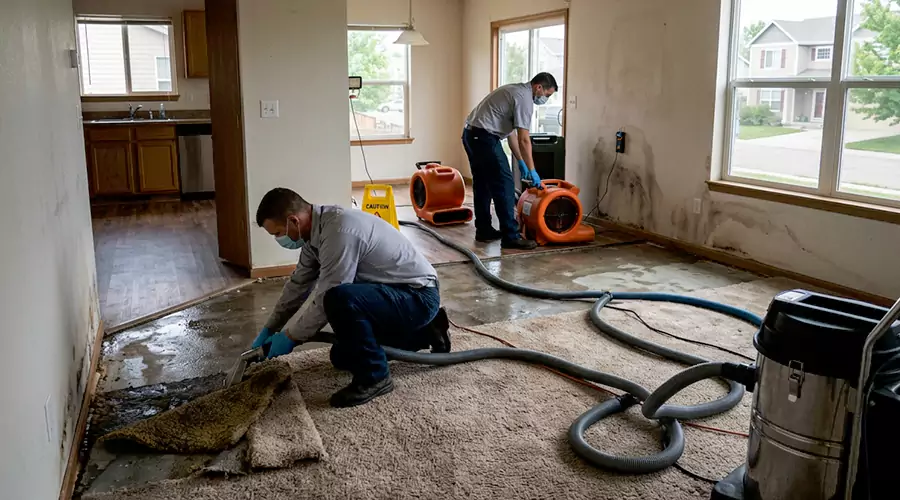
Water damage extraction is the physical removal of standing or recoverable liquid water from a building after a leak, overflow, or flood. Pumps and specialized extraction equipment remove bulk water before structural drying begins. Extraction is important because dehumidifiers work much more slowly when large amounts of liquid water remain.
Extraction is one stage of recovery rather than the entire restoration process. Water can remain inside flooring or drywall after all visible puddles are gone.
How Does Water Damage Extraction Work?
The extraction process begins after the water source is controlled and electrical conditions are safe. Equipment is selected based on water depth and the affected material. Deep standing water may be pumped out while smaller amounts are recovered with portable or truck-mounted extraction equipment.
A typical sequence is:
- Identify and stop the source.
- Check safety conditions.
- Determine contamination concerns.
- Pump deeper standing water.
- Extract remaining surface water.
- Inspect materials for hidden moisture.
- Begin structural drying.
The goal is to remove as much free water as practical before evaporation becomes the main drying method.
What Equipment Is Used for Water Extraction?
Different equipment is used because a flooded basement requires another approach than wet carpet. Pumps can handle deeper standing water while extraction units remove water from shallower surfaces. Specialized tools may also compress carpet so moisture trapped below can be recovered.
Common equipment includes:
- Submersible water pumps
- Portable extraction units
- Truck-mounted extractors
- Wet extraction wands
- Moisture meters
A standard household vacuum should never be used to collect standing water. Wet-dry equipment must also be used only when electrical conditions are safe.
Is Extraction the Same as Structural Drying?
No. Extraction removes free liquid water while structural drying removes moisture absorbed inside building materials. A floor may appear dry after extraction even though the subfloor still holds excess moisture.
| Stage | Main Purpose |
|---|---|
| Extraction | Remove liquid water |
| Moisture mapping | Locate remaining moisture |
| Structural drying | Dry absorbed water |
| Monitoring | Confirm drying progress |
| Reconstruction | Repair damaged finishes |
This distinction explains why fans or dehumidifiers may continue running after the visible water disappears. Water extraction and remediation can therefore continue for several days after the initial pumping stage.
Why Should Water Be Extracted Quickly?
Fast extraction reduces the amount of time building materials remain exposed to water. Drywall can wick moisture upward while carpet padding can hold water beneath a surface that looks almost dry. Water that remains inside the property can also contribute to mold growth. The EPA recommends drying water-damaged areas within 24 to 48 hours when possible. Prompt water damage extraction also makes later dehumidification more efficient because drying equipment does not have to evaporate large pools of liquid water.
What Happens to Carpet During Extraction?
Wet carpet can sometimes be extracted and dried after a limited clean-water loss when contamination has not made the material unsuitable to retain. The padding underneath requires separate attention because it can hold more moisture than the exposed carpet suggests.
Extraction tools may press water from:
- Carpet fibers
- Carpet backing
- Padding
- Floor surfaces beneath the carpet
Contaminated water changes the decision. Carpet exposed to sewage should not be treated like carpet affected by a recent clean-water supply leak.
What Happens After the Standing Water Is Removed?
After extraction, the affected area should be checked for moisture that remains inside porous building materials. Moisture meters can help determine whether drywall or wood is still above its normal baseline.
Drying may involve:
- Air movers
- Dehumidifiers
- Controlled ventilation when appropriate
- Removal of unsalvageable wet material
- Repeated moisture readings
Water damage carpet drying may continue even after extraction equipment no longer pulls visible water from the surface.
How Long Does Water Extraction Take?
A small room may be extracted within a few hours while a heavily flooded property can require much longer. Water depth and access have a major effect on the initial removal time.
| Water Loss | Approximate Extraction Stage |
|---|---|
| Small localized spill | 1 to 3 hours |
| Single flooded room | Several hours |
| Multiple rooms | Several hours to a full day |
| Deep basement flooding | One day or longer |
These are planning ranges for liquid-water removal rather than complete drying. Structural drying may continue for several days afterward.
What Warning Signs Mean Extraction Alone Was Not Enough?
Visible water removal is only the first step when moisture has moved into the building. Swelling or continued odor can show that materials remain wet after extraction.
Watch for these signs:
- Drywall feels soft.
- Baseboards begin swelling.
- Hardwood starts cupping.
- Carpet padding stays damp.
- Paint bubbles near the floor.
- Indoor humidity remains elevated.
- A musty odor develops.
- Moisture readings remain high.
Emergency water damage cleanup should continue into drying when these signs are present.
What Can You Check Yourself?
You can compare the affected area with a similar dry material using an appropriate moisture meter. The goal is to track whether moisture is falling after extraction rather than relying on touch alone.
Follow this process:
- Record a dry reference reading.
- Test the affected material.
- Mark the same testing location.
- Repeat the reading the next day.
- Watch for steady improvement.
Do not remove electrical covers or cut into walls just to look for water.
When Should You Call a Professional?
Professional help is appropriate when standing water covers several rooms or reaches electrical systems. Contaminated water also requires more caution because ordinary extraction does not address the contamination left on building materials.
Seek help when:
- Sewage is present.
- Deep water fills a basement.
- Electrical components are wet.
- Several rooms are affected.
- Hardwood or insulation is saturated.
- Water remains inside wall cavities.
Commercial extraction equipment can remove large volumes of water much faster than ordinary household tools.
How Can You Reduce the Need for Future Extraction?
Fast leak detection limits how much water collects before anyone notices the problem. Know where the main shutoff is located and inspect common failure points throughout the year.
Useful steps include:
- Check appliance hoses regularly.
- Install water alarms near major appliances.
- Inspect beneath sinks monthly.
- Test sump pumps before storms.
- Address recurring plumbing leaks quickly.
Conclusion
Water damage extraction removes standing and recoverable water before structural drying begins. Pumps handle deep water while extraction units remove moisture from floors or carpet. Removing visible water is not proof that the structure is dry, so hidden moisture should still be checked afterward. If sewage or electrical hazards are present, professional assessment can determine the safest extraction and drying plan.
Frequently Asked Questions
Is water extraction the same as water removal?
The terms are often used similarly. Extraction usually refers specifically to mechanically removing free liquid water.
Can a wet-dry vacuum handle water extraction?
It can handle small amounts when electrical conditions are safe. Larger losses may require pumping or commercial extraction equipment.
Do dehumidifiers remove standing water?
No. Dehumidifiers remove moisture from the air and support drying after bulk liquid water has been extracted.
Can hardwood be saved after extraction?
Sometimes. The boards must be dried gradually and checked for moisture before sanding or repair decisions are made.
Does extraction remove water inside drywall?
Not completely. Structural drying or selective material removal may be needed when drywall has absorbed significant moisture.
How do I know when extraction is complete?
Free water should no longer be recoverable from accessible surfaces. Moisture monitoring then determines how much structural drying remains.